On Political Violence: After Saturday Night
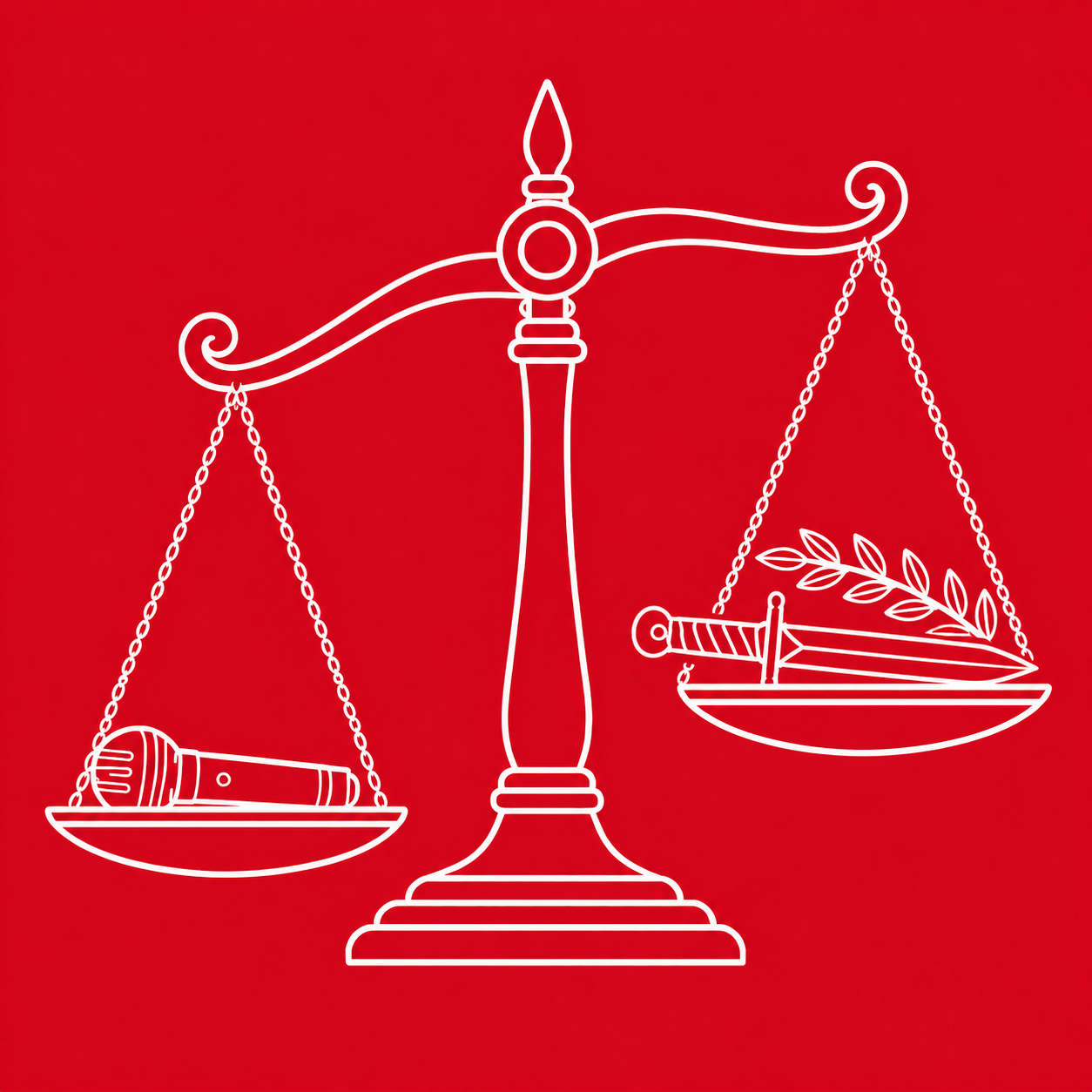
After the assassination attempt at the White House Correspondents' Dinner, a careful look at when political violence has historically been held to be justified — through the Declaration of Independence and Paul Johnson's account of how Hitler dismantled Weimar — and why we're closer to that line than we should be, but not yet across it. I do not condone political violence. I condemn it. This episode is about why that condemnation is harder to make honestly than it used to be.
CHAPTERS
0:00 Cold Open — The WHCD Attempt
2:32 The Boy Who Cried Wolf
4:43 This Isn't Left-Right, It's Constitutional
8:24 January 6 and the Shapiro Concession
9:25 What Trump Has Done This Term
12:26 The Declaration of Independence at 250
13:51 Twenty Out of Twenty-Seven Grievances
19:14 Five Months — Paul Johnson on Hitler
24:36 The Lawyers, the Camps, the Generals
28:31 Stripping Citizenship, Stripping the Aesthetic
31:09 Same Trajectory
33:48 Cole Allen, and the System That Still Holds
40:19 "I Don't Regret My Vote"
42:02 The Cost of Discipleship
CITED IN THIS EPISODE — Paul Johnson, "Modern Times" (chapter on Nazi consolidation) — Ben Shapiro on Sam Harris's "Making Sense," April 2026 — Federal cases: Train v. City of New York (1975); Brandenburg v. Ohio (1969); United States v. Wong Kim Ark (1898); Watts v. United States (1969) — Rockwell family statement on DHS, November 2025 — Cole Allen manifesto, published in full by the New York Post #PoliticalViolence #WHCD #ConstitutionalCrisis #Trump #DeclarationOfIndependence #January6 #Bonhoeffer #PaulJohnson #Podcast